Over recent years, the Windrush has come up in the news on a regular basis. It has normally been commenting on the plight of many of the people who travelled on it to Britain in the late 1940s. From this we can guess, unless you already know, that the Windrush was a ship called the Empire Windrush. It docked at Tilbury to the east of London on the 22nd June 1948. It had come from the Caribbean and carried 490 men and two women who had arrived to set up a new life here in Britain.
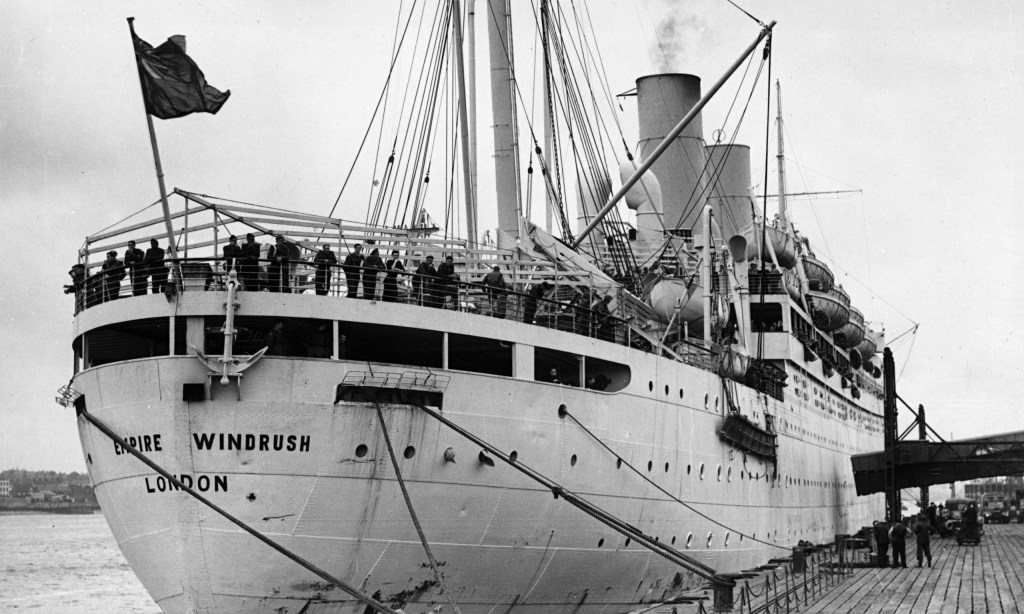
Today we hear about the problems of asylum seekers and migrants attempting to get into a number of countries including Britain, Italy and many others by some very dangerous means such as crossing the English Channel in small boats run by criminal gangs. However, the situation in 1948 was on the outside very different. It had only been three years since the end of World War II and Britain, like many countries in Europe were still picking up the pieces. There was a huge amount of rebuilding to undertake as well as workers in many other industries. But one og the problems face was that there were fewer workers to do this work because the war had killed so many of working age.
To help to get over this problem, the British government offered many people from the “colonies” the chance to live and work in Britain. Since they had docked in London, many of the new workforce decided to set up home in London. Such a number arriving all together posed a few problems regarding accommodation. To begin with, many of them were put up deep underground beneath Clapham South Tube Station in south London. These spaces were large and were used to house the locals when there were bombing raids during the war. Today, there are a number of businesses which rent out this space.
Clapham is not far from Brixton and this is the area where many of the new arrivals set up home. To this day, Brixton has a Caribbean feel to it. The Empire Windrush was not the only ship to bring new workers to Britain, but it is still remembered, sometimes for not good reasons including how some of the arrivals were treated. But these occasions were to help to make London the multi-cultural city it is today.
 John Pullen