All countries and cities go through periods of change. They can be positive such as when improvements are made to the inner workings of the city. But they can also be negative with disasters and the like plaguing a place. For London, it could be said that the seventeenth century had a bit of everything which makes it stand out as a century of challenge and change.
So, what makes this period stand out? Charles I was on the throne and that meant that England was plunged into a civil war with the Royalists on one side and opposing them, the Roundheads led by Oliver Cromwell. Their intention was to depose the king and turn England into a republic. After a bloody conflict, they got their way and Charles I lost his throne along with his head.
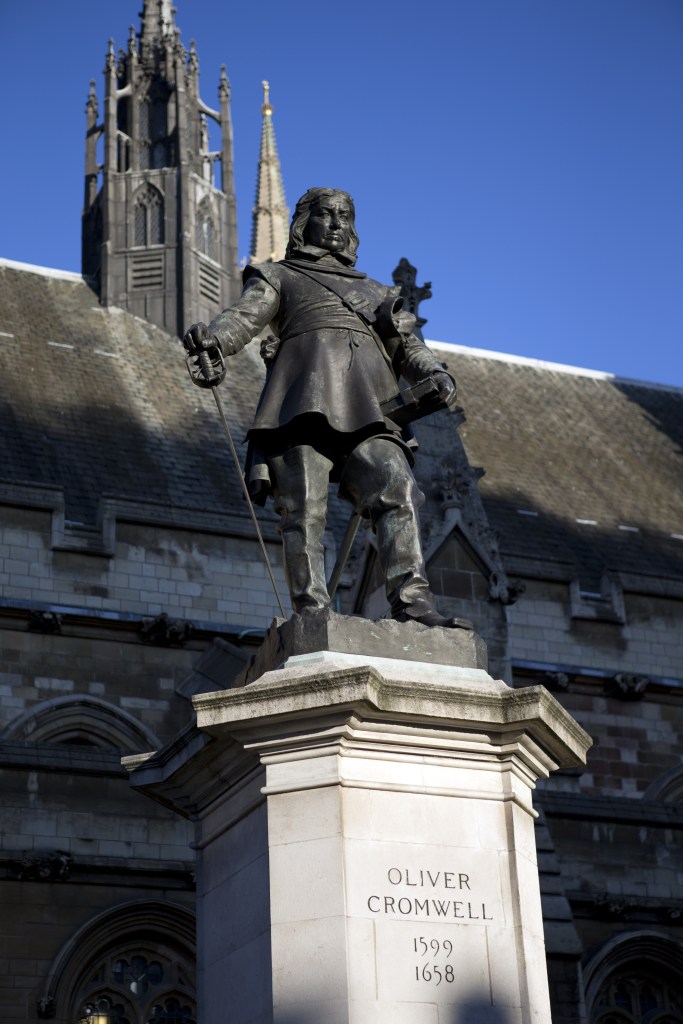
On the 30th January 1649 the deposed monarch was taken along Whitehall to the Banqueting House where a stage had been set up where the execution would take place in front of thousands of onlookers. The beheading was carried out and Cromwell with his Puritans took charge of the country. Many of the festivities enjoyed by the people were banned including Christmas and many theatres were destroyed. Eventually, in 1660, Cromwell was overthrown and he also suffered the fate of execution. He was actually executed twice but that is another story. The son of Charles I took the throne back and he ruled as Charles II.
So, what other earth-shattering events overtook London in the seventeenth century? In 1665, the Black Death paid a ig visit to London and the country as a whole. Many died. It was known as the Great Plague of 1665. A year later, London suffered another disaster. A bakery shop in Pudding Lane within the City of London caught fire. It quickly spread and within four days a large part of the City of London had been turned to ashes.
One of the results of this was that Christopher Wren and others were commissioned to replace and rebuild many of the churches which were destroyed. That is how we have the current St Paul’s Cathedral which was completed in the 1670s. Another famous building which came under threat during this century was none other than the Palace of Westminster also now known as the Houses of Parliament. But this was to be no accident. A plot to kill the whole government had been hatched by a group of prominent Catholics including Guy Fawkes. Their plan failed and many of the conspirators suffered the gruesome execution of being hung, drawn and quartered.
If we also include in the seventeenth century the construction of some of the iconic and important buildings that are still to be seen and visited in London today, then we have the Queen’s House in Greenwich Park. It was built for the Wife of James I, Queen Anne of Denmark by the famous architect Inigo Jones in 1637. Unfortunately, she died before she could live there. But, the wife of Charles I was able to use it. In addition, Ham House was also built during this period. It too, can be visited today. No matter how you compare it to other centuries, the seventeenth for London at least, was a very notable century.
 John Pullen