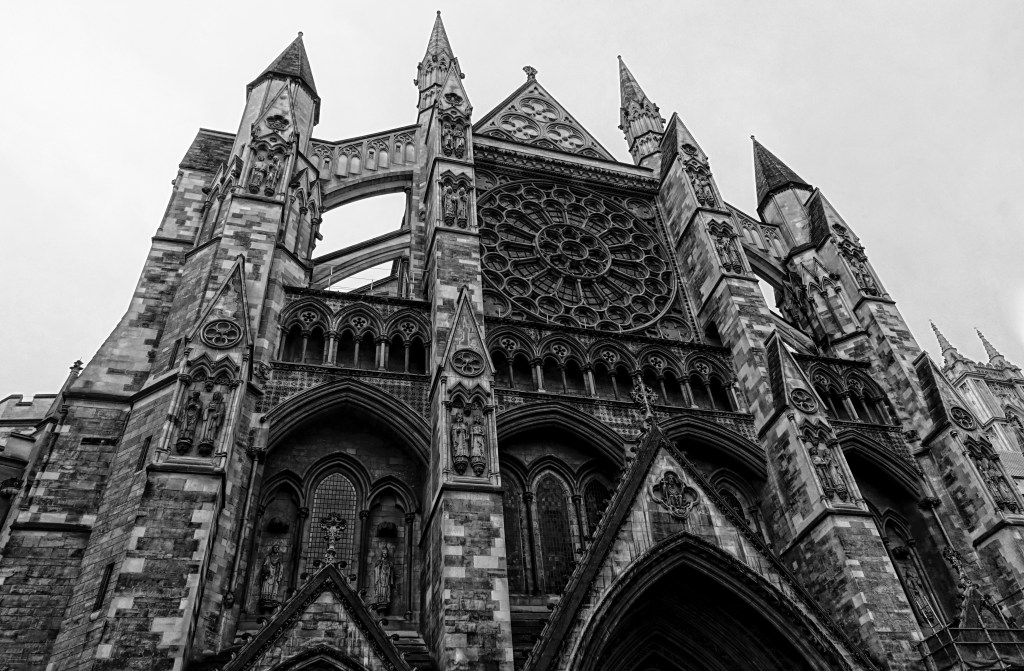
Over 1,000 years ago, there were two main parts to London and they the City of London and Westminster. This separation could be illustrated by the fact that the original site where St Paul’s Cathedral is now, was the first great religious building and it was called East Minster. So, when the large abbey to the west was built, it was given the name of Westminster Abbey. However, the road that joined the two parts still goes by the same name and that is the Strand. Remember it is the Strand and not The Strand as is often wrongly believed.
So, what could we expect to find in Medieval London? Well, you would find a number of buildings such as Westminster Abbey and across the road from there is the only remaining part of the original Palace of Westminster and that is Westminster Hall. However, since the City of London is situated where the location of the Roman settlement of Londinium was, there was a tendency for most people to live and work in the City and not Westminster, In fact, from the Strand westwards, there wasn’t much in the way of buildings other than those around the river and along the Strand. A reflection of this was the fact that at this time Westminster had five parish churches in the area whilst the City of London had over 100.
However, the large buildings that were along the Strand belonged to some of the richest and most influential people in the land. In fact, it could have been called Bishops’ Avenue (there is a modern such avenue in north London which also has some large houses), because there were a number of bishops living there. These included the Bishop of Bath & Wells, the Bishop of Durham, the Bishop of Exeter and the Bishop of Salisbury. In addition, there were a few notable abbots also in the Strand.
Why were such a lot of high ranking clergy living in London when their area of office were scattered around the country? Good question. It seems that London was the centre of what was going on and with that, you could partake of the best that was on offer. So, being human and not perfect, many preferred to spend much tome away from their various parishes. There are reminders today of there presence in the fact that around the Strand we can find roads and streets that reflect their lordships past habituation. Another building which is still used today is Lambeth Palace across the Thames from Westminster. It was and still is the London home of the Archbishop of Canterbury. Along the Strand is another famous old building. It was known as the Savoy Palace. During this period, it was the home of John of gaunt. Today it is known as the Savoy Hotel.
Westminster could boast one major step forward, for it was in 1746, that a man by the name of William Caxton set up his first printing press and this was located in the precincts of Westminster Abbey. During the medieval period there was no Westminster Bridge. If you wished to cross the Thames at this point, then you had to take a ferry.
As can be imagined, outside of this area, there wasn’t much more than open farmland. So, if you went to Leicester Square or Piccadilly Circus in those days, you would have only seen trees and grass. But, if you ventured a little way to the west of Westminster where we can now find St James’s Park, you would instead have found St James’s Hospital. However, you would not have stayed long as it was a hospital for lepers and in those days, the disease and the victims were cast out of normal society.
 John Pullen