In 1666, London burned during the Great Fire. But that lasted for about four days. The fire I am about to discuss lasted one night and is thought to have destroyed more property than its predecessor. During the period of 1940 to 1941, London came under air attack from the German Luftwaffe. This time of massive bombing raids, usually on a nightly basis, was known as the London Blitz.
The targets were mainly to be the docks and other important parts of the British war effort. But, the bombs rarely stayed just on those targets. True, bombing was not an exact science in those days but if warehouses, national buildings and homes were also hit, then no one in the German High Command was going to complain. It is important to point out that many other cities came under sustained bombing raids. And it is also just as important to state that the allies also bombed much of Germany in return.
However, London was always going to be top of the target hit list. And on the night of the 29th to the 30th December 1940, London was bombed in the worst attack it had encountered. The raid came in waves of enemy aircraft. As was usual, the bombers were protected by single engine fighters. It began at 6pm on the 29th and lasted a full 12 hours until 6am the following morning. During that time it is estimated that approximately 100,000 bombs were dropped on London.
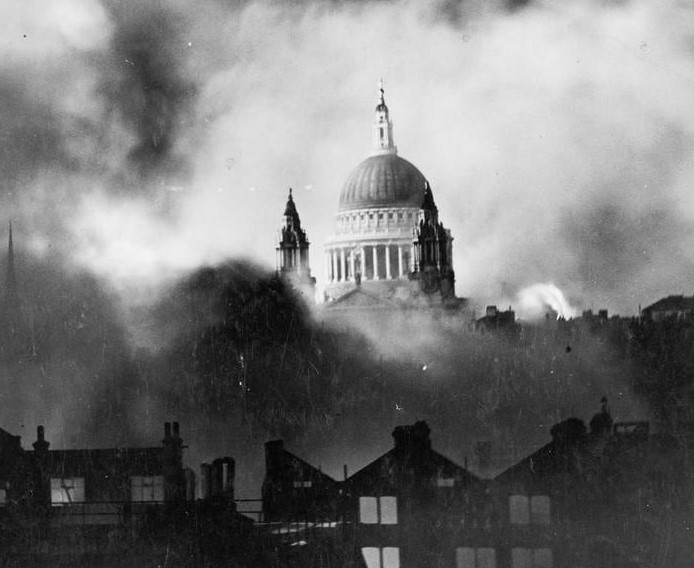
The devastation is said to have stretched from Islington across the City of London, the docks and other parts of central London. This particular date was chosen as the Germans knew the Thames would be a low water for much of the night. And since the fire services needed the river to fuel their hoses, the fires became even more destructive. Many civilians who had not got to the shelters were killed. But, it would be the fatalities within the fire service that night which I find frightening. It is said that 14 lost their lives and 250 were injured.
All in all, it is thought that over 1,500 separate fires resulted from the bombs. This was in part due to the fact that many of the bombs were of the incendiary type; which means they were designed to create fires. It is well-known that one of the most iconic buildings in London survived and that was St Paul’s Cathedral. However, that didn’t mean that it wasn’t a target. That night, 83 incendiary bombs hit St Paul’s. Luckily, they were extinguished before any major damage was caused. It is also said that that night Prime Minister Winston Churchill issued an order that St Paul’s Cathedral must not be destroyed. The blitz would continue into 1941 but although it did destroy many parts of London, it did not destroy the morale of its people.
 John Pullen