Many people have heard of the Dead Sea Scrolls, but may not be too aware of the stories surrounding their discovery and their content. The scrolls are also known as the Qumran Caves Scrolls. They were discovered by accident starting in 1946 when a group of teenage shepherds were working near the ancient settlement of Qumran, near the northwest shore of the Dead Sea, which is now part of the West Bank. One of them carelessly threw a rock into one of the many caves in the area and was surprised to hear something shattering inside. The word cave may be a bit ambitious. It was more of a slit in the cliff face. This would make sense as it took so long to discover the scrolls.
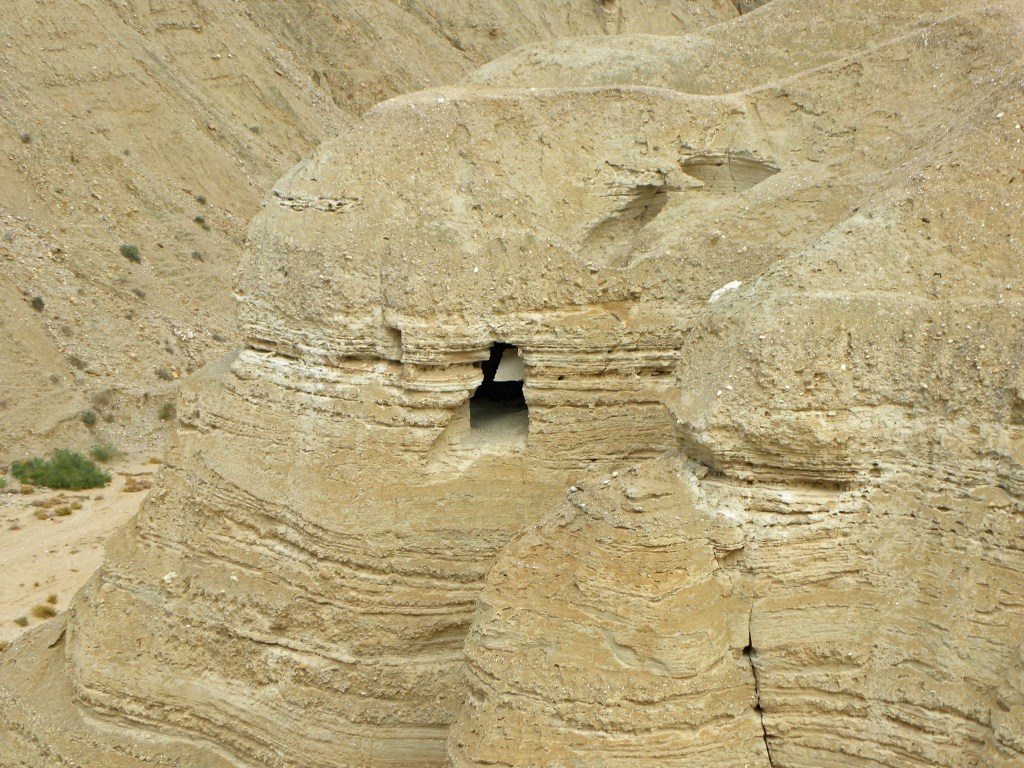
He and his fellow shepherds entered the cave and discovered a number of large clay jars. Seven of these jars contained manuscripts made of papyrus and leather. The boys found an antiquities dealer who bought all of them. These were sold on in lots to other dealers and scholars. They were estimated to be in the region of 2,000 years old. News of the find soon spread and archaeologists and treasure hunters descended on the area to search for further jars. Over the next several years, another ten caves were found to contain clay jars containing similar scrolls.
Many of the scrolls had not remained intact and this accounted for the total of fragments found being over 10,000. These could be consolidated to between 800 to 900 manuscripts in total. It was an amazing find. Most of them were written in Hebrew, the language of Judea. But, who had written them and hid them so well? We do know that they were written over a period of several hundred years from the third century BCE and the second century CE.
At this time, the settlement of Qumran was home to a Jewish sect called the Essenes and it is believed they were responsible for the writing and hiding of the scrolls. The reason they were hidden is likely because Qumran was overthrown and destroyed by the Romans in 70 CE. It is also thought by some scholars that some of the scrolls were written by early Christians who had fled Jerusalem for fear of persecution by the Romans.
So, what is the content of the scrolls and what do they tell us? We know that there are fragments of manuscripts which come from every book of the Old Testament except for the Book of Isiah. It is believed it might have disintegrated completely or is lying in a clay jar yet to be discovered. In my opinion, the former is the likeliest reason. In addition to the Bible texts, there are a number of manuscripts describing sectarian rules as well as other religious texts.
There are also some interesting information contained within the scrolls. One of the most tantalising is recorded not on papyrus but on copper. This might indicate that this was more important than the others and would need a longer life. And the subject of this copper scroll? It appears to be a type of treasure map containing clues to dozens of caches of gold and silver. In all, it lists 64 such treasure troves hidden all over Israel. The clues are obviously not that accurate or detailed, because none of them have ever been discovered.
 John Pullen