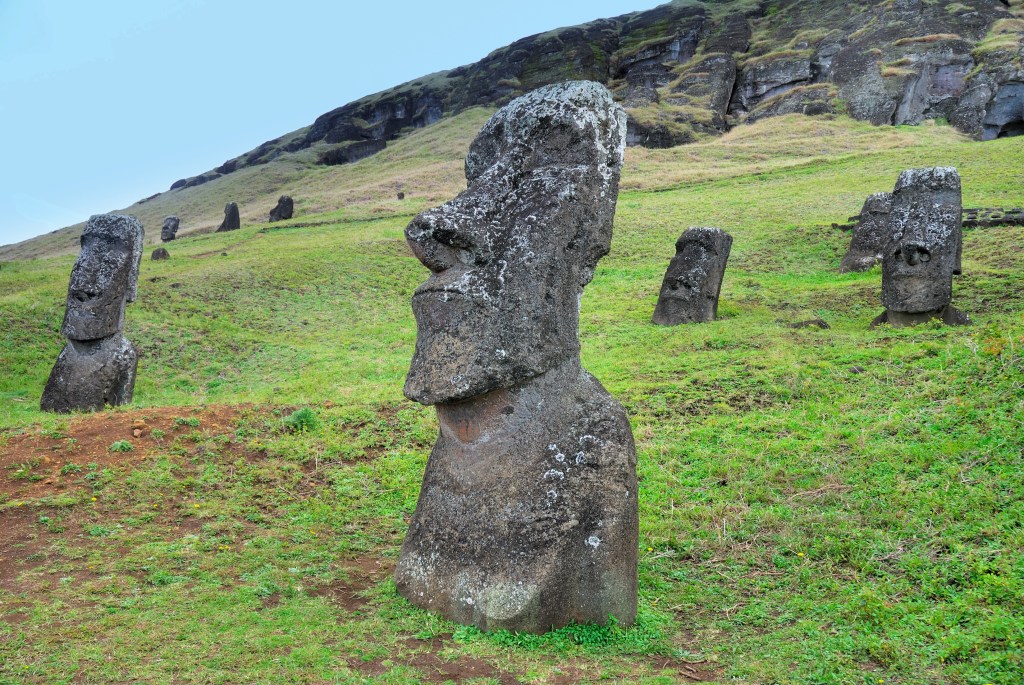
Easter Island in the southeastern Pacific Ocean has been an island of mystery since its discovery on Easter Sunday, 1722. The person who first stepped ashore was a Dutch explorer by the name of Jacob Roggeveen. He and his crew were astounded to find giant statues made of stone standing throughout much of the island. These statues were known as the Moai.
They were of different sizes and weights. The largest measure up to 33 feet high and weighs 86 tons. Scientists have been able to date them as being built between the thirteenth and seventeenth centuries. There was a tribe on the island when Roggeveen arrived and they would have been the builders of the statues.
Unfortunately, their civilisation died out over the previous 150 years. In the seventeenth century, it was estimated that the population amounted to 15,000. But a century later, it had fallen to 3,000. We are not sure why, but there was a mini ice age and tribal clashes could have been responsible. The final members of the islanders probably died of tuberculosis which possibly was imported by a monk who was the first to become the first European to live on Easter Island in the nineteenth century.
One big question remains and that is how such large statues were transported to their various locations around the island. The possibilities range from wooden rollers to wooden sledges and “walking” them one step at a time. We are still not sure which was used. One other question is why so many of the statues are unfinished. One theory is that there was a war between two tribes which led to many dead. Once again, we do not know for sure.
You can visit Easter Island by ship from South America.
 John Pullen