Socrates was a Greek philosopher who is credited with being one of the main founders of Western Philosophy. He was born in 470 BCE. He was a well-known figure in Athenian society and seemed to be admired and mocked in equal measure. We know much of what he preached and talked about, but this is not due to him as he kept no records of what he said or did. It was down to others like Plato to describe his thoughts on philosophy and life.
Therefore, it will come as no surprise to find that we also know little of his life. For example, we do not know if he had any employment. Some say he might have followed in his father’s footsteps and become a stonemason but there is no evidence to support this theory. What we do know is that he served in the Athenian Army as was his obligation just as it was for every other citizen of Athens at the time. It was recorded by others that he took part in some major battles and showed much bravery.
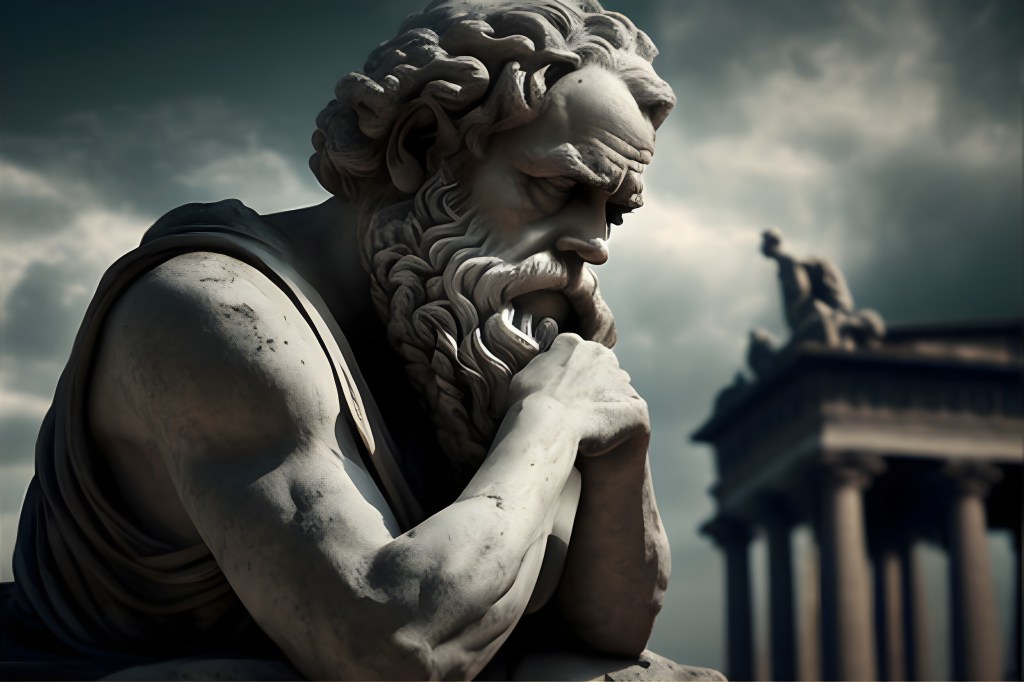
So, if we assume that Socrates took no formal employment, what did he do to earn money? This would have been important as he did not come from a rich family and after marrying his wife, they had three children. It might be thought that he earned money by teaching his philosophy to students and others. But, we know that he would not accept payment for this work.
We do know that he spent a lot of time listening to and participating in the Athenian Assembly which was the governing body for Athens. This was looked on as a privilege that was granted to all male adult citizens of Athens. It has been written that Socrates not only taught his version of philosophy but made it a part of his life. So, it meant that he would often be in command of his emotions and could tolerate much hardship with complaint.
As I said before, Socrates was a person who polarised those around him. He was also often outspoken and this was to eventually spell his doom. In 399 BCE, he was accused by the authorities of impiety which means that he did not show respect to the gods that the state believed in. His trial lasted for only one day and he was sentenced to death. The form of execution was that he should himself, take poison. It sounds like he practised his philosophy to the end, as he spent his last day in prison refusing to let friends plan an escape for him. He duly took the poison and died.
 John Pullen