We live in a colourful world. The sky is blue, the grass is green and pretty much most things will reflect a colour which we can pretty much identify. But is this completely accurate? How do you know that my “red” is exactly the same as your “red?” Colour is a wavelength on the electromagnetic spectrum of energy. If we look at a rainbow or a spectrum of colour, we see it generally going from red to purple although the transition between them is not precise. The red end of the spectrum has a longer wavelength than the purple. But the purple end has a greater frequency.
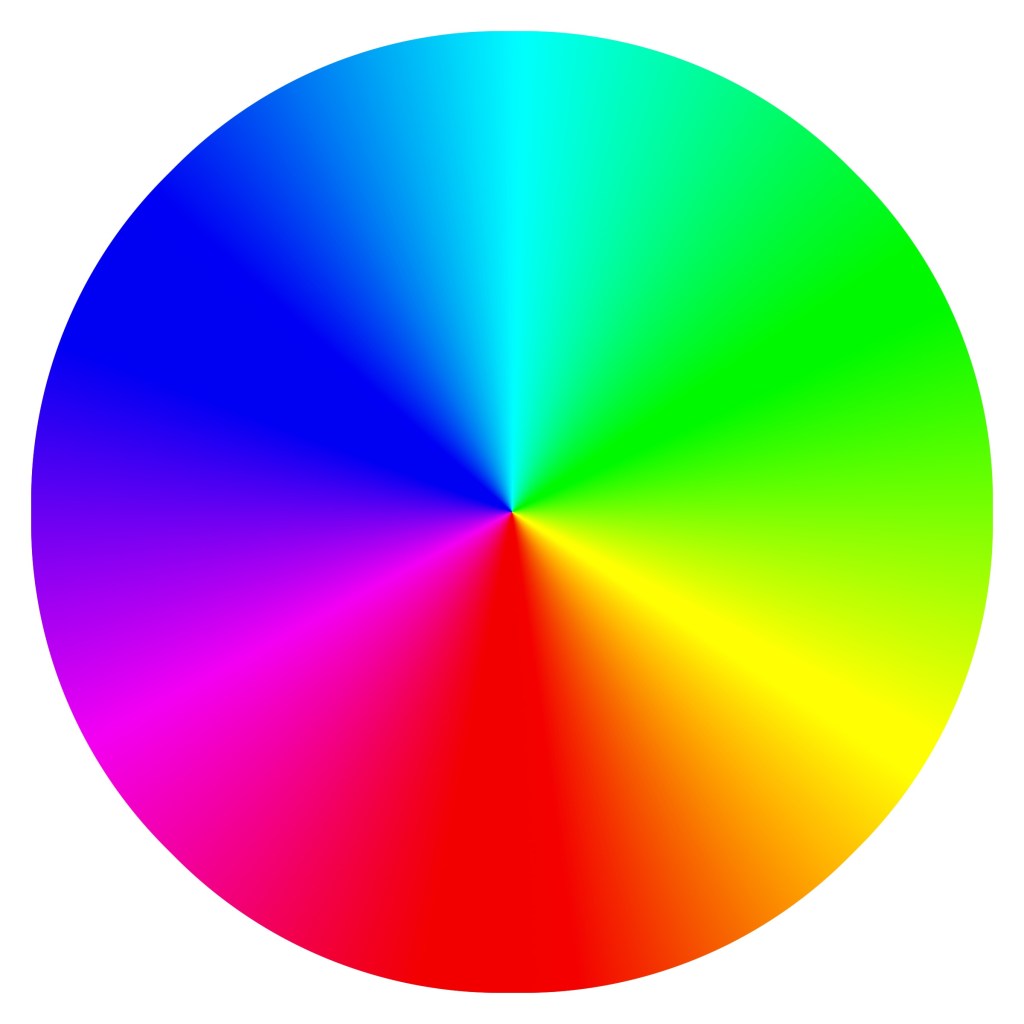
We see an object’s colour as the light reflected from the object to our eyes. The other colours are absorbed by the object and therefore, do not travel to our eyes. But it is important to understand that these are just light waves and the only difference in the colours is their wavelength and associated frequency. It is not our eyes that see the colour. That takes place in the brain when it receives that information via the optic nerve.
So, the question is again, does my brain see that colour in the same way as your brain? It is not the same as comparing the size and weight of objects or measuring temperature; these can be given precise values which we can all agree with. But the colour is a little different. If you think about it, if we hadn’t awarded the spectrum with the order of colours, ROYGBIV, we would individually find it hard to put them in the right order.
Colours are not objective and also not completely subjective. They occupy a position in between. It has been defined as “our subjective experiences of an objective phenomenon.” Finally, there is a discussion about whether colour even exists in nature or only in our minds.
 John Pullen