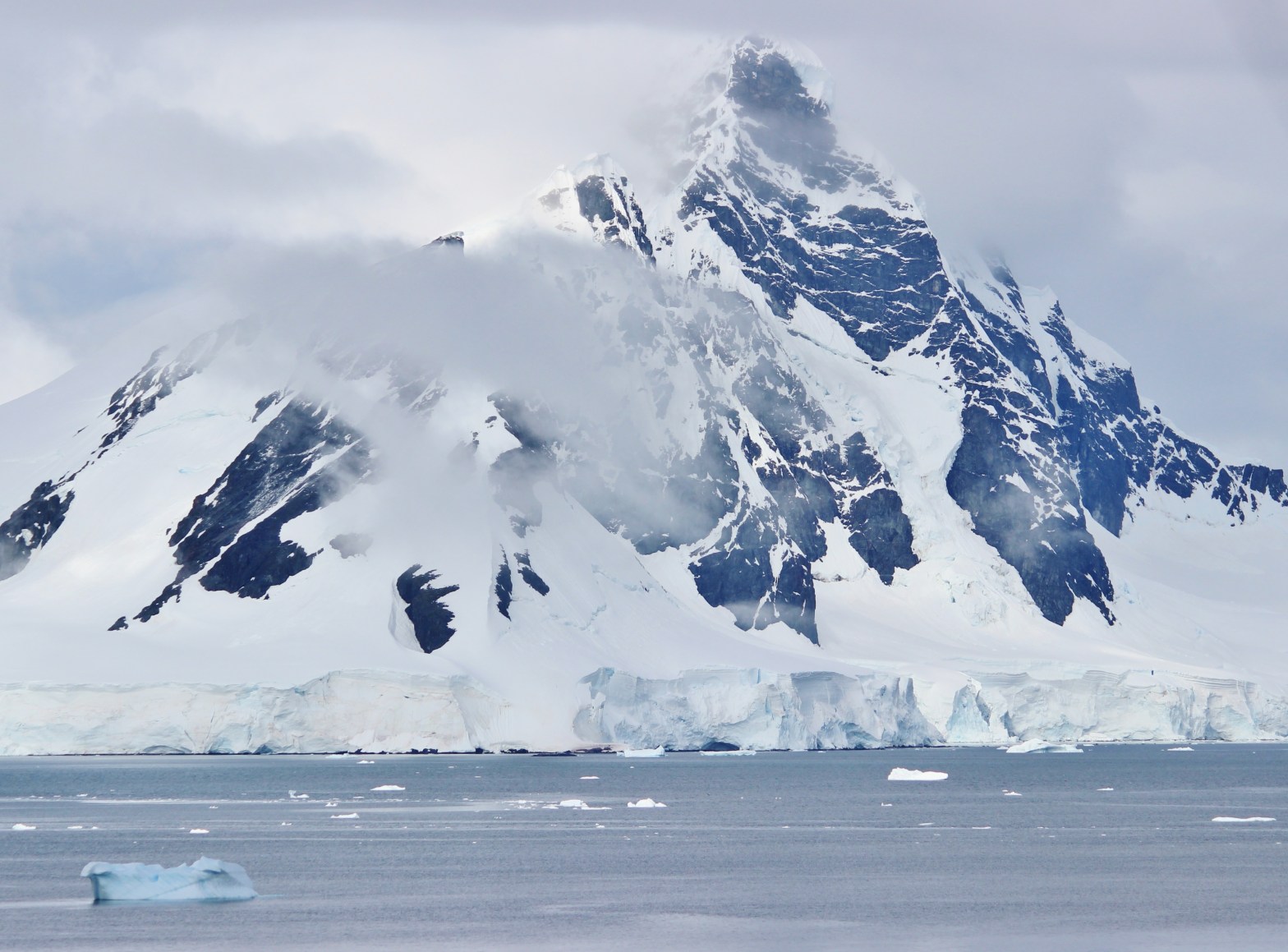
Lakes are pretty common around the world. You probably live pretty close to one. They can be quite small and compact or they can be huge with towns and cities dotted around their shores. Many of the larger ones are world-famous such as Lake Geneva in Switzerland and Lake Garda in Italy. Of course, there are also the Great Lakes in North America and Canada. But the one I want to discuss here is not on the surface of the planet, but a great distance below it. It is also not easy to reach the area above it as it is located in Antarctica, below the Russian Science Station called Vostok. It is the reason that this sub-glacial lake is called Lake Vostok.
And it is not alone as there are around another 400 such sub-glacial lakes in Antarctica. Lake Vostok is situated under the East Antarctic Ice Sheet whose surface is almost 11,500 feet above sea level. The lake itself is over 13,000 feet below the surface, thereby placing it about 1,600 feet below sea level. Another interesting aspect of this lake is that it is made up of freshwater and not seawater.
Its statistics are also pretty amazing. It measures 160 miles in length by 30 miles wide. This means it covers nearly 5,000 square miles in area which makes it the 16th largest lake by area in the world. The average depth of the lake is nearly 1,500 feet and the total volume of water is 1,300 cubic miles, making it the 6th largest lake by volume.
So, how did we find out that it even existed? In the 1950s and 1960s, seismic soundings were made which indicated a submerged lake. But it wasn’t until 1998, that advanced laser altimetry confirmed it and its size. The age of ice can be traced back by drilling down into the ice and withdrawing an ice core. The lower the core, the older the ice. We can also get a lot more information by analysing these cores. For example, it tells us a lot about the climate through time and the composition of the air. It is the equivalent of geologists analysing the different strata of rocks.
Using these techniques, we understand the oldest of the ice core to be about 400,000 years. However, it is believed that the water in Vostok Lake may not have been disturbed for between 15 million to 25 million years. In 2013, a core was brought up which consisted of lake water ice. However, as soon as the ice was pierced, the liquid lake water rushed upwards towards the surface. Unfortunately, to keep the borehole from icing up, a mixture of kerosene and freon is used and this came into contact with the “virgin” water, thus contaminating it.
Two years later, in 2015, a new borehole was made through the ice down to the lake. This time, the scientists were careful not to contaminate the water; at least, that is the official report. This is an ongoing investigation and further samples of the water along with sediment from the lake bed are to be sampled and analysed. Why is this so important? We have strong evidence that similar lakes of liquid water exist below two satellites in our solar system; Europa which orbits Jupiter and Enceladus which orbits Saturn. If simple life or organisms can be detected in Vostok Lake, then it may indicate the possibility of such life on other worlds.
 John Pullen