Edward Elgar is one of Britain’s greatest music composers. Many of his works have come to be regarded as what Britain stands for, or at least what it did stand for when it was composed. Every year during the Last Night of the Proms held at the Albert Hall in London, we hear some of his works such as Pomp and Circumstance.
He was born in the small village of Lower Broadheath near the town of Worcester on the 2nd of June 1857. He learned the piano and violin at a young age. His father was involved in music publishing and played the violin whilst his mother was interested in the arts and encouraged Elgar in his music studies. At the age of 29, he married one of his piano pupils by the name of Caroline Alice Roberts who became known by her second name of Alice. It is she who had a major part in the Enigma of Elgar.
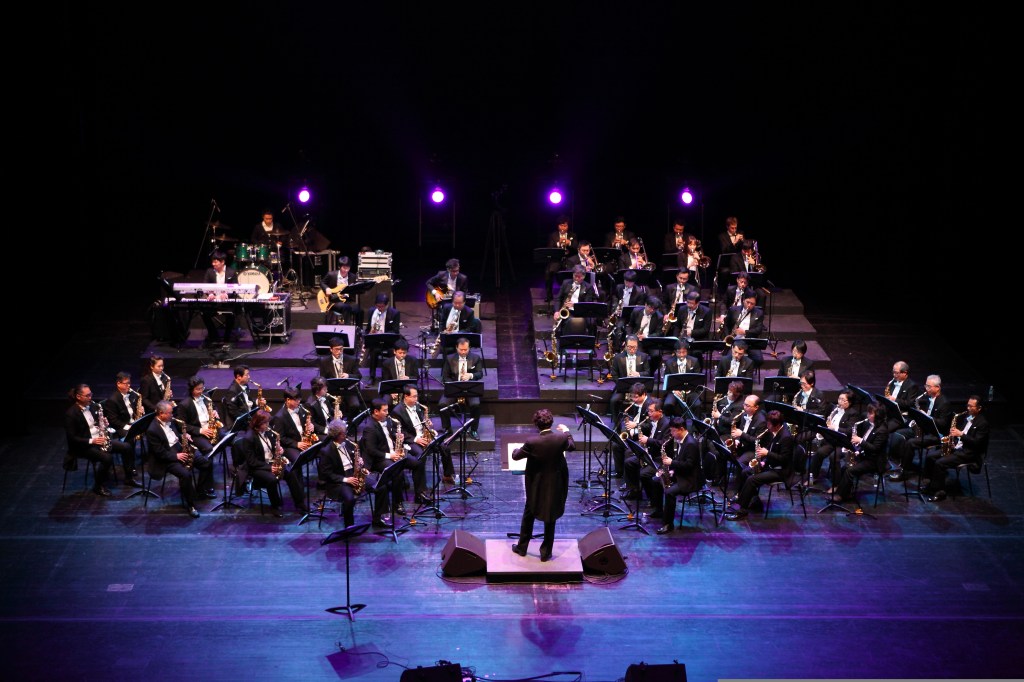
Of course, the Enigma refers to one of his best-known and loved pieces of music, the Enigma Variations. But, how he came to compose the piece and what exactly he meant by the Enigma is not too well-known. However, the story goes like this.
It is said that on the evening of the 21st of October 1898, Elgar and Alice were at their home in Malvern. At the time he was a music teacher by day and he did not make a secret of not enjoying it. They had finished dinner and Elgar sat at his piano, lit a cigar and began to tap out some notes. What happened next is best left to the words of the man himself.
“In a little while, soothed and feeling rested, I began to play, and suddenly my wife interrupted by saying: ‘Edward, that’s a good tune.’ I awoke from the dream. ‘Eh! Tune, what tune!’ And she said, ‘Play it again, I like that tune.’ I played and strummed, and played, then she exclaimed: ‘That’s the tune.’ The voice of [my wife] asked with a sound of approval, ‘What is that?’ I answered, ‘Nothing – but something might be made of it.’”
This intervention by Alice caused Elgar to pay attention to the tune he was playing. He christened it “Enigma.” This was not meant to be literal as an enigma means it is a riddle which needs to be solved. Instead, he described it as a “dark saying [that] must be left unguessed”, expressing the “nothingness” from which it came,
The official name given to the piece was Variations on an original theme. Opus 36. Notice that there is no mention of the word “Enigma.” However, it appeared written in pencil on his original score. Finally, it is perhaps only right, that we should be left with a real enigma; one conjured up by the composer himself. He said he had installed a musical mystery deep within the piece.
“The Enigma I will not explain – its ‘dark saying’ must be left unguessed, and I warn you that the connexion between the Variations and the Theme is often of the slightest texture; further, through and over the whole set another and larger theme ‘goes’, but is not played . . . . So the principal Theme never appears, even as in some late dramas – eg Maeterlinck’s L’Intruse and Les sept Princesses – the chief character is never on the stage.”
This Enigma has never been solved.
 John Pullen