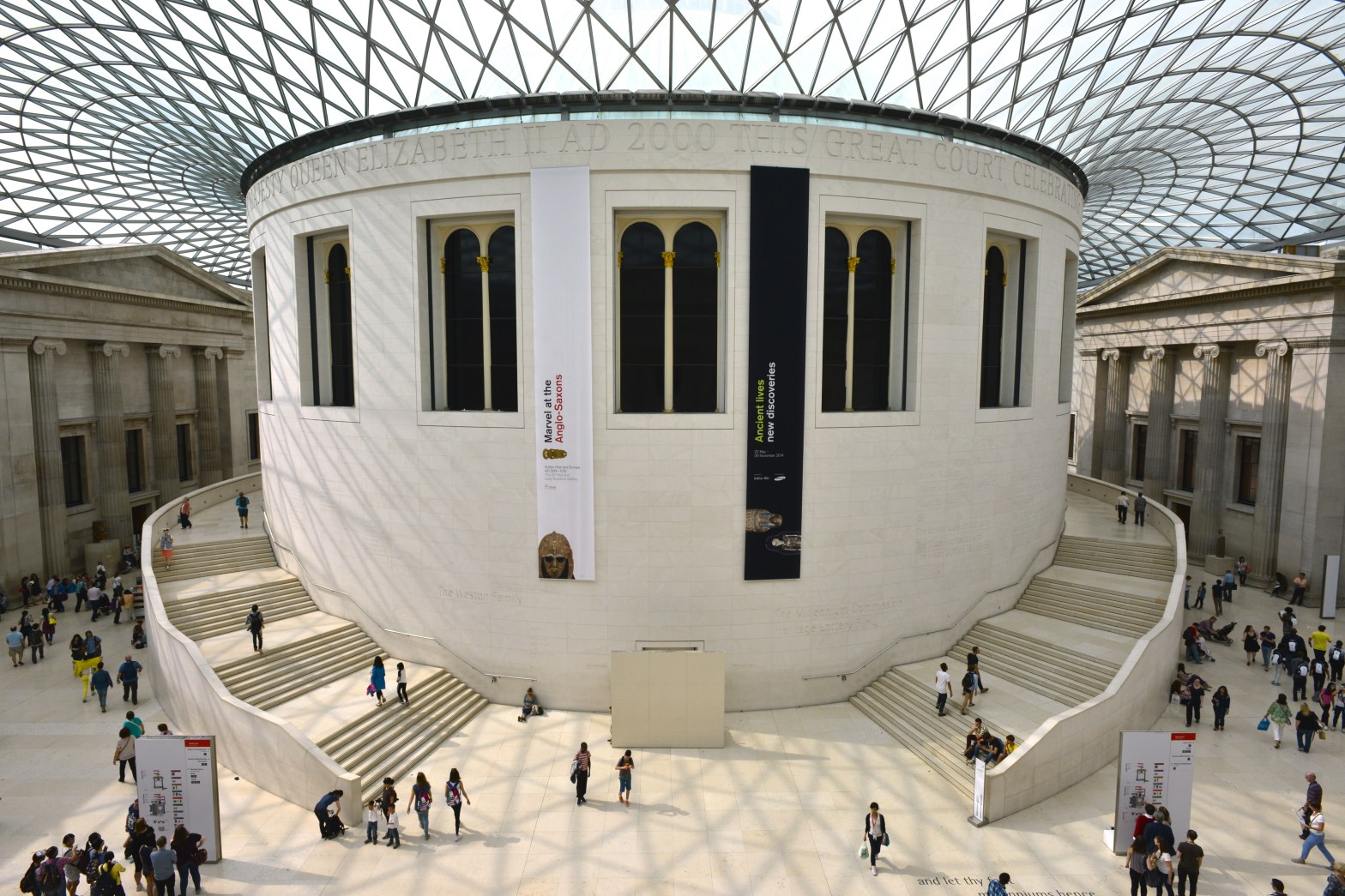
An area of central London may not be one that jumps to mind such as Soho, Mayfair or Belgravia, but do not dismiss Bloomsbury as it has plenty to offer and has an interesting history. You can find it just north of New Oxford Street and east of Tottenham Court Road. Its northern boundary is the Euston Road. So, what can you find there today? It is home to the British Museum as well University College London, UCL and University College Hospital or UCH.
Like much of London outside of the City of London and along the river to Westminster, much of what is now the metropolis was just open countryside. For the area that is now Bloomsbury, the first time it was put to use was after the Norman Conquest of 1066 when it was taken over by a family of Normans by the name of Belmond at the turn of the thirteenth century. We can now find the origin of the name Bloomsbury as it means “Belmond’s Manor.”
During the 1300s, the land was passed over to a religious group, the Carthusians. They built a monastery called Charterhouse which over time became Charterhouse School. Although the building is still there and occupied, the school has moved out of London. The monastery itself only lasted until the Dissolution when most such buildings were “stolen” by the Crown and the monks thrown out or worse. In fact, in Charterhouse’s case it is said that the Abbot was nailed to the wooden front door when he resisted the takeover.
This particular part of Bloomsbury is called Charterhouse Square and during the Black Death, it became the site of one of the largest plague pits in London. Today, the square has an open space of grass and trees. It is a pleasant place. But, what is below is something else. It is believed that the Charterhouse plague pit contains up to 20,000 bodies of the victims of the bubonic plague.
From the 1600s, there was more building in the area. Further squares were built such as Southampton Square which you can find by its present name of Bloomsbury Square. In the 1700s and 1800s, the Russell family became heavily connected to Bloomsbury and they were behind the building of Russell Square. The first arrival of the British Museum was in 1755. The building was called Montagu House. But, by the 1840s it was too small and so it was demolished and a new much larger building was built. And this is the British Museum you can see and visit today.
 John Pullen