Pyotr Ilyich Tchaikovsky is arguably one of the best-known and popular classical composers that has ever lived. His large output of 169 pieces covered many forms of musical composition from his 1812 Overture, Sleeping Beauty to The Nutcracker Suite as well as many, many others. He was born on the 7th of May 1840 in the town of Votkinsk in Russia. Like many other geniuses or at least those with a special gift to give to the world, Tchaikovsky had another side to his life.
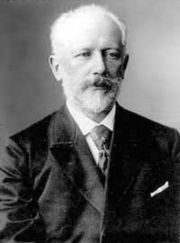
You might think that someone who expresses emotion through their music would be comfortable in life. This was not the case with Tchaikovsky. Throughout his life, he suffered from depression and many crises. He was married once, but the marriage only lasted a few weeks. The marriage caused him to have a nervous breakdown and a period of depression which resulted in him attempting suicide by throwing himself into a river. His wife of a few weeks ended up in an asylum where she died twenty years later.
He was advised by doctors to leave Russia for a time in order to recuperate. So, he and his brother Modest moved to a small village on the banks of Lake Geneva and stayed there for around two years. At about the same time he received financial support from a rich widow by the name of Nadezhda von Meck. She had heard his music and loved it. It was a strange relationship because, over a period of fourteen years, they exchanged over 1,000 letters, but never met once.
These depressive periods and failed female romances are likely to be down to his homosexuality which he tried to keep very private. However, he is alleged to have taken a lover, the son of the caretaker in his brother’s apartment block. But, even more prominent, was that he was also infatuated by his nephew. This apparently reached the ears of members of music’s hierarchy and eventually to the Tsar of Russia, Alexander III. These stories were to have an influence on the death of Tchaikovsky.
The official account is that he drank a glass of unboiled water in a restaurant. This was at the time of a cholera outbreak and untreated water was the carrier. A few days later, he was dead. Two doctors diagnosed death from cholera. But already there were murmurings that it was not such a simple explanation. The rumours about his homosexuality led to talk of possible suicide and even murder. Those in the suspect “line-up” included influential members of musical society and even the Tsar himself as a punishment for being gay.
To this day, the official verdict is death by cholera. But, the rumours still persist. Perhaps the only way to clear this up is to exhume his body for toxicology tests. If he was poisoned, then compounds such as arsenic can remain detectable in a body for over 100 years. But, that is unlikely to happen. Instead, it should be enough to forget the accusations about the man and just to enjoy his music.
 John Pullen