Here is a question that at first sounds easy to answer, but as with many things in nature, the answer is not quite that simple and involves more information and knowledge than we first imagined. So, what is the question? It is which mammals need to eat the most food? Okay, let’s take the obvious answer. The bigger the animal, the more food it needs. That does seem to make sense. So, this is the shortest article I have written? Well, not quite. Let’s take a closer look.
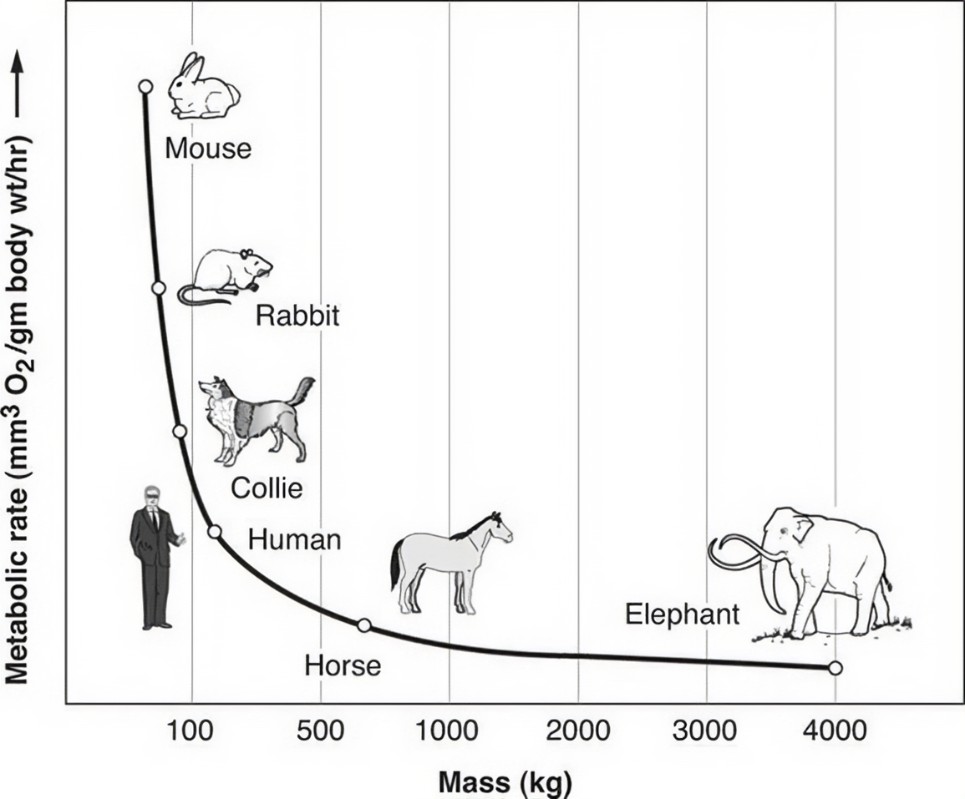
Measurements of this type are not conducted just on size. Scientists use a ratio called a Basal Metabolic Rate or BMR to make comparisons. The BMR measures the rate of energy expended by an animal, including humans, while at rest. It does this by using an animal’s surface-to-volume ratio. Therefore, an animal with a larger surface area in relation to its volume will have a higher BMR. A larger BMR means that the animal will lose body heat at a higher rate. The aim is to keep its body temperature stable so needs more energy which it gets from its food intake.
On average, smaller animals will have a higher metabolic rate, so will need more oxygen than other animals including humans. Smaller creatures also have a more efficient oxygen transport system. So, on a comparison scale, the elephant will have a lower BMR and a smaller food intake relative to a much smaller creature such as a mouse.
 John Pullen