In 1571, one of history’s great artists was born. His name was Michaelangelo Merisi but he became known as Caravaggio. He was a remarkable painter and brought dramatic lighting to many of his works. Some works were also known for their homoeroticism which has led historians to debate whether Caravaggio was homosexual himself.
He came from the Lombardy region of Italy but at the age of 21, he moved to Rome, where many painters of the time were drawn to. Like many such artists, he struggled for recognition. Many of his paintings at this time were still lifes. But, during this period he also painted one of his most striking works, “The Boy Bitten by a Lizard”. If you wish to see this painting, it is hanging in the National Gallery in London. It has come a long way since it was painted because it was first sold on a street.
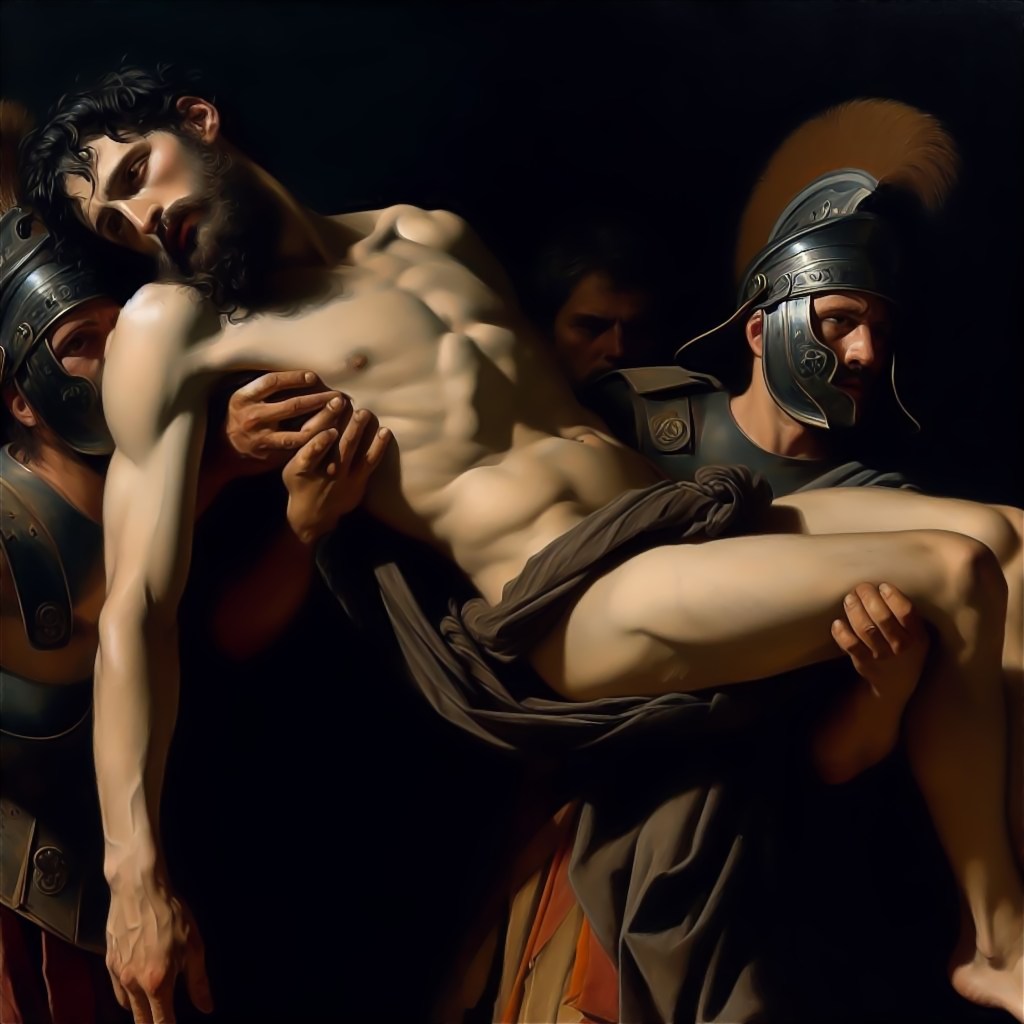
It took three years before Caravaggio’s painting was recognised and he gained an important supporter. He was Cardinal Francesco del Monte and soon Caravaggio found himself living in the cardinal’s large residence. He was now able to paint in easier surroundings and he did so at a fast pace. This was also the way he lived his life. It is said that he would furiously work on a painting for two weeks and walk the streets with a temper as furious as his work pace.
He would wander from place to place and look for trouble which he often found and resulted in fighting. His personality, as you might imagine, was tempestuous. This behaviour was going to end very badly and in 1606, he argued with a young man. This led to a sword fight in which the young man was killed. Caravaggio escaped the law by leaving Rome for Naples and from there to Malta.
He needed a pardon and the way to do this was to get one from the pope. Since Malta was run by the Knights of Malta, Caravaggio knew that if he joined them, he would have a better chance of that pardon. This he did by giving them a painting. But soon he picked a fight with another knight which resulted in his expulsion from the knightly order.
He made his way back to Rome when he heard that some influential friends had successfully petitioned the pope for a pardon. Caravaggio went first to Sicily and then on to Naples. It was there that he had another fight which left him disfigured. When he had recovered, he intended to sail to Rome. But, he got into more trouble and the ship left without him but with all his possessions on board.
He began to make his way along the coast, heading for Rome. But, he soon fell ill. He developed a fever and within days, he died. He was just 38 years old. The cause of death, however, became questionable. Some believed he contracted the fever from his recent wounds. Others thought that he may have died of malaria or syphilis whilst some thought he had been murdered. The mystery remained for close to 400 years.
Then, modern forensic science intervened. Bones believed to be those of Caravaggio were exhumed and underwent testing including DNS analysis. The results showed that the bones had a very high level of lead in them. This is not unusual for artists as the paints they used contained much lead. It was also stated that Caravaggio did not take many precautions when he painted.
It is known that lead poisoning is not likely to kill on its own, but it does help explain his behaviour. The effects include depression and changes in personality. This fits in with his behaviour. But, lead poisoning can contribute to the cause of death if the victim has infected wounds. The scientists maintain that their results are 85% positive and that this is the reason for the personality changes and the death of Caravaggio.
 John Pullen