Many of us are aware of how mountains are formed over millions of years. The movement of tectonic plates beneath the surface of this planet can sometimes push upward and create mountain chains. Mount Everest and the Himalayas are a good example of this mechanism.
However, things may not be as simple as we first thought. Recent research has revealed that the Constantiaberg Mountains near Cape Town in South Africa are continuing to grow taller. Over a period of eight years, from 2012 to 2020, the mountain range has grown by an average of six millimetres. Okay, this is small, but if you think in geological time, which works in millions of years, it does make a difference.
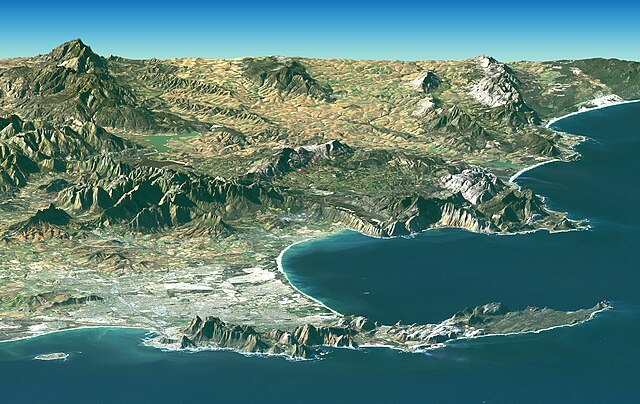
However, that is not what the surprising part. This mountain range is not being pushed up by the action of plate tectonics. Instead, it looks like the force involved is due to drought. It is thought that during periods of drought, water is drawn out of the ground, and this would have the effect of the surface expanding up. It is akin to releasing the pressure on a piece of memory foam and watching it rise.
The researchers used state-of-the-art global positioning equipment, which is capable of measuring very small movements. The question is, this is all quite interesting, but does it have any importance to us today? The answer is yes. Climate change is a clear and present danger to our planet. And water is a precious commodity, which is already becoming a scarce resource. It is often said that the next world war will be due to a shortage of water and not oil or gas reserves.
So, if we can measure rises in the landmass which is not due to plate tectonics, then it could serve as a warning of a drought developing. What we would do with that information is probably open to debate.
 John Pullen