How well do we know ourselves? Of course, we, as a species, are a very complicated subject. But there are several fundamental questions about who we are, why we look different and whether we are still evolving? Let’s try to shed some light on these questions. Most of us are aware of Charles Darwin’s work on the theory of evolution. Today, the vast majority believe it to be the truth behind how we and other creatures slowly evolved to the world we inhabit today. There are some who believe in the creationist theory, and although I personally do not hold with that explanation, I respect their belief.
The term homo sapiens was coined by Carl Linnaeus in 1758. It is Latin for “wise human”. Perhaps there have been many occasions in history and today’s world that might challenge the first part of that term. It had been believed by many that we had descended from apes. However, today, we can say that humans and apes shared a common ancestor in the past. To date, we have not discovered this ancestor, but we think it existed millions of years ago.
Before we evolved, there were ancestors of ours who began to slowly expand their outlook and colonise the planet. For example, we know that our ancestors began in East Africa before moving north. This was around 2 million years ago, and the species was homo erectus. This means that the ancestor stood on two feet and did not move on all fours as previous species did. However, some scientists believe that there may have been several parts of the world where our ancestors evolved separately. By 200,000 years ago, homo erectus was on its way.
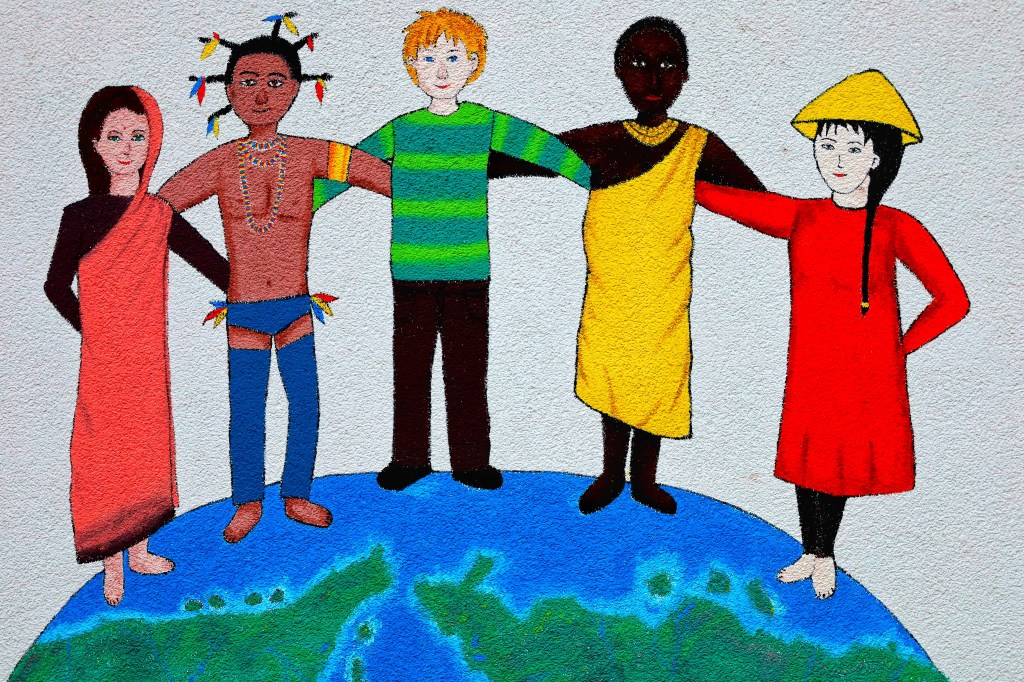
Over vast periods of time, some oceans were passable due to ice ages. The last places to be inhabited were North and South America. This brings us to another basic question. Why are there differences in skin colour in humans? It is likely due to our early wanderings and the type of weather in different parts of the world. Around 14,000 years ago, most people had dark skin, brown hair and brown eyes.
However, when some of them journeyed to northern climes with less intense sun, their skin tended to lighten, which helped them to absorb Vitamin D, which is necessary for our immune system and is absorbed from the sun’s rays. Those humans who were in hotter countries developed darker skin, which contains more melanin. This is a chemical which protects the person from the danger of excessive radiation from the sun. When we look at differences in skin colour, it all makes scientific sense. So, perhaps we should ask the question why there is racial problems in the world?
Perhaps the final question is, are we still evolving? We know evolution is usually a very slow process. There are exceptions, but that is another story. The quick answer to the question is yes, we are still evolving. The Darwinian saying, “survival of the fittest”, still holds. We inherit genes, and if there is there arises a stronger or better-equipped set of genes, then over time, they will become the norm. Another reported example is the people of Tibet. They were descended from the Han Chinese, but over just the last 2,700 years, they have adapted to living in the higher altitudes of the Himalayas. They have a gene adaptation which gives them the ability to live in an atmosphere containing less oxygen. This is also heralded as the fastest adaptation through evolution that we know about, affecting humans.
There are a lot of other questions relating to the human condition, and we will discuss some of those in later articles.
 John Pullen