Our solar system currently has 8 planets: Mercury, Venus, Earth, Mars, Jupiter, Saturn, Uranus and Neptune. If some of you ask, “Where is Pluto?” you may remember that around 20 years ago, it was demoted to dwarf planet status. If you are unhappy about this, I do have some sympathy for you. However, this is not about the demise of Pluto, but about the question of whether there is another major planet out there beyond the orbit of Neptune. It is a question which has been asked for about 100 years and has also been given the name of Planet X. That sounds a bit like a science fiction “B” movie.
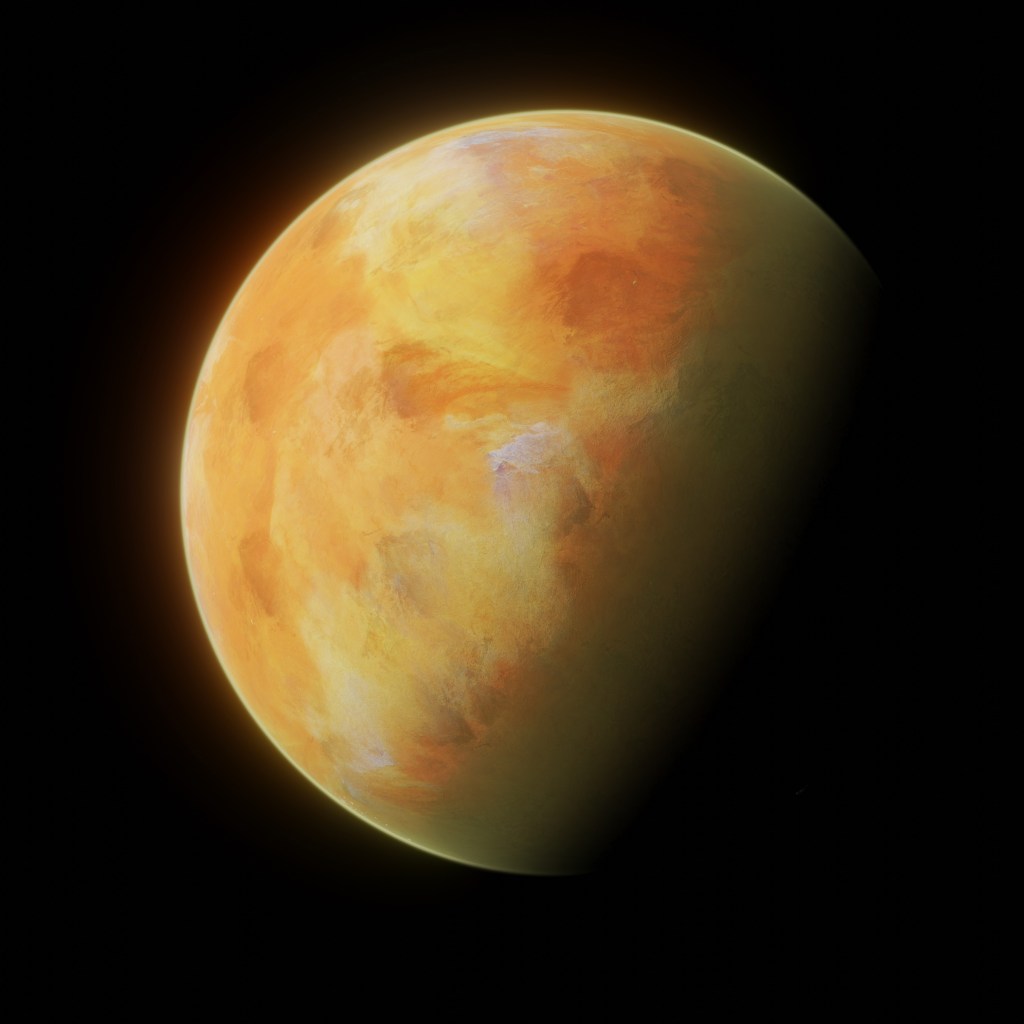
So, what evidence do we have for even suspecting such a planet might exist? The planets in our solar system are kept in their orbits by the powerful force of gravity from the sun. Its influence can be measured, and the latest findings are that this force extends 160 times further than the orbit of Neptune. It obviously gets weaker the further away from the sun, but it does allow us to contend that a planet could be further out.
Other evidence revolves around the reason why some objects do not orbit in the way they should. The first candidate was the planet Uranus. Observations showed it did not obey orbital physics. Perhaps there was a large planet further out, causing this discrepancy? The answer was eventually discovered when it was found that the early calculation of the mass of Uranus was wrong.
However, that is not the end of the story. Outside the orbit of Uranus is the Kuiper Belt. This is home to a large number of objects of differing sizes. Pluto is one such object. Observation of some of these bodies also shows them not to be orbiting in a manner expected by physics. Once again, could there be a large planet out there whose gravity field was affecting these small objects?
This has prompted further observations of the Kuiper Belt, which have confirmed the erratic movement of some dwarf planets and asteroids there. Some of these objects have very elliptical orbits, rather than circular ones. Two possible reasons put forward to account for this are that they have been hit out of orbit by something else. This is not unknown, as our Moon was created by another object the size of Mars colliding with the young Earth. The other reason given is the existence of Planet X.
Crazier reasons include the existence of a black hole within the Kuiper Belt. This has been dismissed by most astronomers. The area of the Kuiper Belt is huge, and telescopic observations are sparse compared with the area to be searched. Therefore, if there is a Planet X out there, it may be many years before it is discovered. My feeling is that it does not exist, but it would be great to be wrong.
 John Pullen