The title of this article does not mean that by checking your teeth, you can prove you are related to Aunty Maud or Uncle Fred. What it does mean is that small pits found in the teeth of a prehistoric human species may indicate which of these diverse sets of early humans were more closely related to one another than to others. It was previously thought that these pits are not primarily an indication of disease. What we now believe is that they are there because of genetics. Therefore, they can help to fill in several gaps that remain in understanding our family tree.
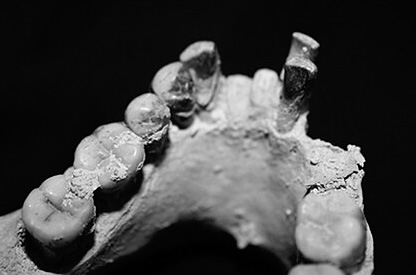
Unusual pitting was found in two Asian species of hominid who lived about 200,000 years ago. Analysis of the teeth showed that both of these species were more closely connected to others rather than to any others. In addition, it has been known for some time that the enamel in teeth holds information about our evolutionary past. Unfortunately, we do not have a great number of human remains to analyse, so research in this area is still in its early stages. If we can discover more examples, then it might be another indicator of the evolution of early species of human.
Part of the current research is to discover whether this pitting differs between males to females. Also, the present work indicates that these genetic markers have been around for millions of years. So, if they eventually prove to be reliable, it may open a new avenue in the history of us.
 John Pullen