There cannot be many people who are unaware of artificial intelligence or AI for short. It is very rapidly assisting or, as some might say, taking over our lives. There does not appear to be that many occupations that will escape AI and a great many jobs may also go. Whether these will be replaced by new ones, we do not yet know.
So, are there any limits to where AI is heading? There seems not, as teams recently competed to see if their version of an AI could pilot a spacecraft. Okay, this was in a simulator, but it is a good guide to the future. The criteria was based on a video game/simulator programme called the Kerbal Space Program Differential Space Challenge. A team of researchers using a version of ChatGPT came second overall. It was able to meet the challenges posed for it during the competition.
We are all used to chess games being played by computers against Chess Grandmasters with the computer coming out on top a lot of the time, but is this any more than just a game? It is not and for a number of reasons. There are currently thousands of satellites in low Earth orbit along with even more space junk. It is rapidly becoming a problem. There is a very real chance of some of them colliding. As a mark of how important this is, the International Space Station, the ISS, has to change orbit now and again to avoid a collision. And as the number of satellites continues to rise, the problem is going to become much more complex.
Space scientists are now looking at using AI to assist them in working out the dynamics of so many satellites and their orbits to keep both humans and hardware safe. In 1969, we reached the Moon and stood upon its surface. Today, the return to the Moon is only a couple of years away and then the focus will shift to Mars. A human mission to Mars and back will take around two years. But, the really interesting heavenly bodies to visit are some of the moons around Jupiter and Saturn.
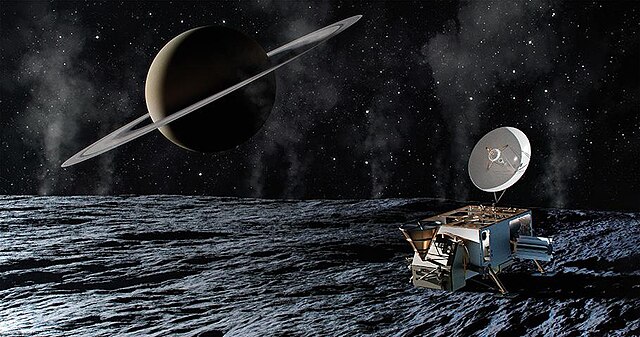
Sending crews there will really be beyond our capabilities for years to come. And this is frustrating as we believe there is a distinct chance of finding some simple life forms there. Space probes have already sent back data to suggest that this could be the case. So, the next stage might be the sending of space probes controlled autonomously by AI “robots”. The thing is, the further away we travel in space, the longer it takes to communicate with the space probe. Decisions have to be taken and having an intelligent machine out there, would be a really good way of exploring the solar system. However, we have to remember that AI is still quite new and there are still many glitches to get over. For example, what are termed hallucinations, are when AI gives an answer which is patently wrong. That cannot be allowed to happen in serious environments. So there is still a way to go, but one day in the future, Captain Kirk is more likely to be an AI computer. No jokes, please!

