We hear a lot about Artificial Intelligence, or AI. A lot of it is good, telling us that we will be able to do things far more quickly than before. There are, of course, warnings which come with such forward jumps in technology. The fact that AI systems may, in the future, evolve autonomously, and that they may prove to become an enemy of mankind. Scientists, including the late theoretical physicist, Stephen Hawking, believed this was a real danger.
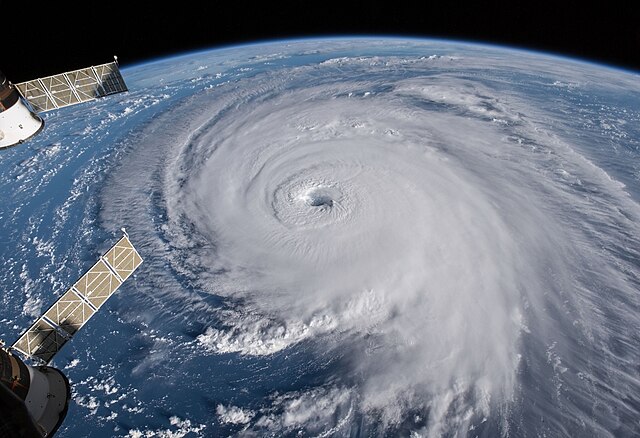
However, before the Terminator destroys us all, AI is proving to be able to protect lives. One of these ways is in being able to warn us much quicker about approaching hurricanes, sandstorms and other dangerous weather phenomena. Weather predictions are one of the most difficult things to predict due to the millions of variations and bits of information that have to be analysed before making a forecast. People still complain about weather forecasters getting it wrong, but they are actually more accurate than most people realise.
So, to make accurate weather forecasts, you need very large computers. And this is where AI comes in. A new model produced by Microsoft, called Aurora, is claimed to be able to compute all the incoming data 5,000 times what could be achieved before. To be able to produce such results, the AI has to be fed a lot of data, and I mean a lot of data. Aurora has been fed more than 1 million hours of weather data to use to predict weather patterns. These come from various sources such as satellite images, information from weather stations, radar plots and many more. Once all this data is on board, relatively little extra information is needed to make forecasts.
It is not only predicting the weather for the next several days, quicker and more accurate than before, that will make a difference, but it can also analyse ocean currents and warn of dangerous water conditions, such as tsunamis. Global warming, climate change, and concerns about atmospheric pollution are front and centre of the focus of many scientists. Aurora and other future AI systems will be able to analyse and predict outcomes faster. AI can be looked upon as a two-edged sword; one good and one possibly bad. This is one of the good aspects.

