For geologists studying the ancient history of the Earth, reaching as far back to even when it formed, they search for rocks which can date from billions of years ago. This is not an easy task, because the further back you look, the fewer examples appear to exist. So, when geologists recently uncovered rocks which could meet this criterion, they took samples back to the lab for analysis. The find was in Canada and is called the Nuvvuagittuq Greenstone Belt. It is located on the eastern shore of the Hudson Bay.
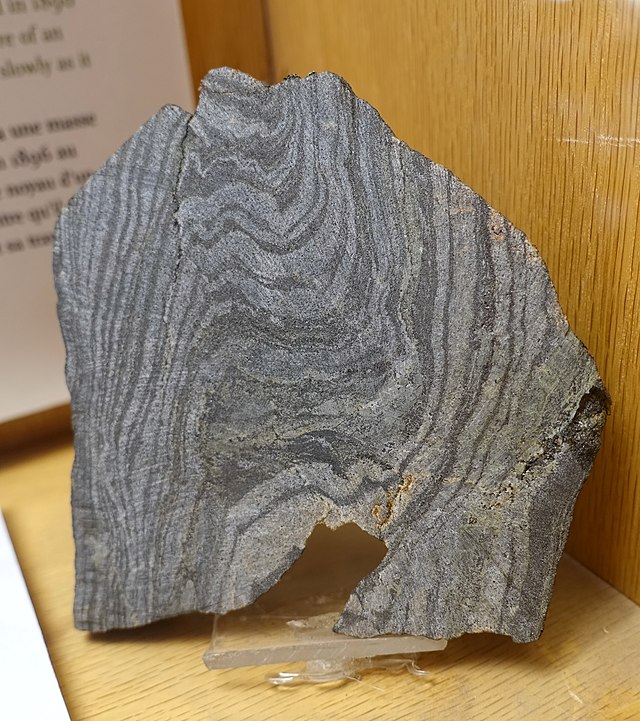
To be able to accurately date such rock samples is not a simple task. The Earth formed around 4.5 billion years ago, and it was nothing like we know today. In fact, it was a globe of boiling hot lava. Over the next 600 million years or so, it cooled and a crust formed on the surface of the planet. And it is these first solid rocks which geologists want to study. To do so may help us to understand the formation of the early Earth and perhaps how life began upon it.
It was an exciting or terrifying time to witness the Earth. It was being constantly smashed by asteroids, and then a protoplanet, which we have named Theia, collided with the Earth with such force that a large piece of rock was thrown away and became our Moon. But back to the rocks. Within them are radioactive isotopes of the original lava. These isotopes decay, and we can use the half-life of the decay to date the sample.
It is not perfect, but the samples from the Greenstone Belt show that they are likely to be 4.16 billion years old to perhaps 4.3 billion years. That is pretty close, in geological time, to the formation of the first solid rocks in the crust. This also means that they are currently the oldest rocks ever to have been discovered on Earth. It is important to note that I am not counting any meteorites that may have impacted the Earth in recent times. Some are older. This should not surprise anyone, as the universe is thought to be around 13.7 billion years old.
It also has to be said that some of these findings are still under investigation because some geologists have cast possible inaccuracies in such dating techniques. However, these samples are helping to educate us in other ways. Some of the rocks were formed by precipitation from seawater, and this means that we can extract data which predicts what the early oceans were composed of and their temperature. This is important because we believe life began in the oceans.

