In the previous article, we took a look at the number of possible planets, not only in our galaxy, the Milky Way, but in the observable universe and came up with the mind-spinning number of at least 20 billion trillion. That is not a typo, just a huge number. Alien life does not mean meeting ET or some advanced alien civilisation. Life in this context means any life from microbes, bacteria or even fossils of life which existed in the past. And the place to start is our solar system.
There are 8 planets in our solar system since the demise of Pluto to a dwarf planet. We can pretty much be sure that there is little chance of finding any sort of basic life on some of the planets. In any case, it might be too difficult technology-wise to explore. These might include Mercury and Venus, which have extremely hot surfaces. I am not saying definitely no chance of life, only that they are not top of the list.
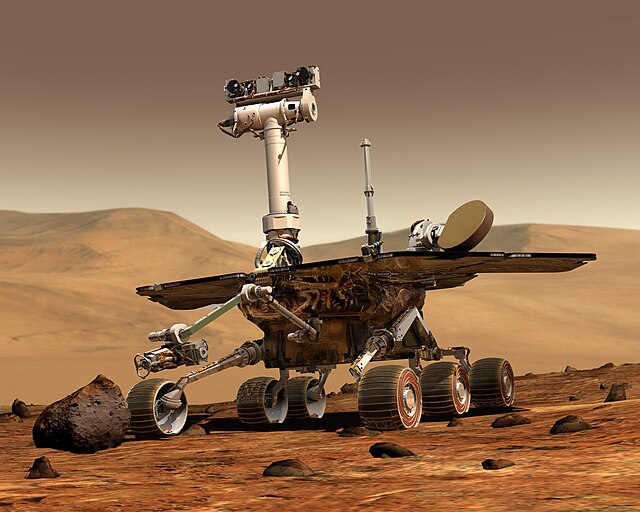
We can say that our Moon probably never had life of any sort. However, our explorations of Mars show that it almost certainly had rivers of liquid water, and it still has an atmosphere, although toxic and thinner than our own. But there might be some primitive life just below the surface, and future space missions are going to check this out.
Past the Asteroid Belt are the two giant gaseous planets of Jupiter and Saturn. Each of them offers little hope of finding life on the surface, although it might be possible to find living cells in their atmospheres. However, the chances of finding primitive life are not on the planets themselves, but on and in several of the natural satellites orbiting the two planets.
At first glance, these moons are going to be very cold as they are much further away from the sun. However, we believe there are oceans of liquid water beneath the surfaces of some of them. Some of you might ask, how can the water exist if it is so cold on the surface and there is no molten core as there is within the Earth? The answer lies with their planet. They are so large that their gravitational fields cause movement and friction beneath the surface, which produces enough heat to maintain liquid water.
So, who are the candidates? Europa is a favourite. It is a moon of Jupiter and has liquid water beneath the surface. We have also discovered chemicals present which are indicative of perhaps simple life existing. Ganymede is the largest moon of Jupiter, and it also has a liquid ocean under its surface, although the surface is covered in ice.
Enceladus is a moon of Saturn. This is quite different, as we have observed jets of water vapour being thrown up from the surface. Analysis of this vapour shows that it contains chemicals, including carbon compounds and hydrogen cyanide, which are both conducive to the origin of life. Titan is Saturn’s largest moon, and it also holds the possibility of finding life of some sort. It is very cold, but we have discovered a carbon-rich liquid existing on its surface. Space probes are and will be heading to all these candidates.
Finally, we move further out to Neptune and its largest moon, called Triton. This is unusual as it still has some geological activity within it. This has produced geysers of nitrogen-rich ice particles when the sun heats up the surface. It is also thought that it, too, might contain a liquid ocean beneath its surface.
Those are the main candidates, and I will make a guess that over the next decade or so, we will find some sort of simple life in our solar system or evidence that life existed elsewhere in our solar system.

