China has its Great Wall, Donald Trump has his “large fence”, and Britain has Hadrian’s Wall. It was built by the Romans during their occupation of Britain between around 100 BCE to 350 CE. Although the Roman legions stamped their authority over most of the various kingdoms, Queen Boudica was a particular problem for them; they literally drew the line near the border with what is now Scotland. They decided enough was enough and to build a wall right across the width of North England to keep the northern tribes out.
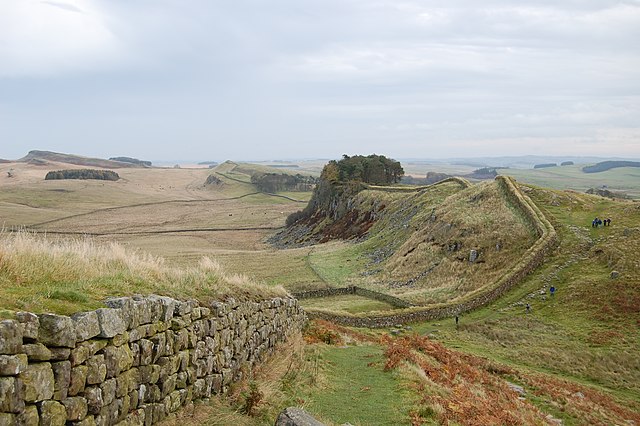
At 74 miles in length, it is the largest archaeological structure in Britain. It stretches from Wallsend on the east coast to Bowness-in-Solway in the west. Construction began in 122 CE on the orders of the then-emperor, Hadrian. It was a defensive wall and marked the northermost border of the Roman Empire for around 300 years. A wall is not much good at keeping your undesirables out if it is not defended by soldiers. Legionnaires from three legions built the wall over several years and were defended mainly by auxiliary military troops.
Around every seven miles, a fortress housed soldiers who could come to the aid of the lookout posts located every mile along the wall. These would contain a handful of soldiers. As an added defence, a trench or dry moat was dug in front of the wall. Any attacking tribes would have to navigate this trench before attempting to scale the wall.
Civilian settlements next to the forts would be set up by locals. Soldiers of the lower ranks were not allowed to marry. This was so they would not have any local ties with the population. However, the settlements often contained the “wives” and children of the soldiers who had secretly got married. It is also true that the soldiers in a legion would be sent to another country other than their own. This was also to stop them from having ties with their home countries. It helped to keep cohesion within the Roman Empire.
The emperor Hadrian died in 138 CE and was replaced by Antoninus Pius, who had different plans for Scotland. He ordered his legions to move north and, as a result, Hadrian’s Wall was abandoned. A new wall called Antonine’s Wall was built north of Hadrian’s Wall, but it did not last very long. Scotland would remain unconquered, and so the Romans retreated back to Hadrian’s Wall.
During the 4th century, Rome had come under threat, and the legions were recalled. Britain was left without Roman rule, and the so-called Dark Ages began. Regarding the wall, some stones were taken to build castles and other fortifications. But most of the wall can still be seen today. It has also been a rich site for archaeologists. Many objects have been uncovered, which have helped to understand what life was like during the Roman period.
One of the most iconic sites along the wall was the Sycamore Gap Tree. It was probably the most photographed part of the wall. The tree was around 150 years old, but in 2023, two hoodlums cut the tree down and damaged part of the wall. At the time of writing, they have just been imprisoned for many years. Many people today choose to walk parts or all of the length of the wall as a holiday.

