In a previous article, “Splitting Africa Apart”, we learned that geothermal activity was causing Africa to begin to split. This is, of course, an extremely slow process. However, all this geological activity is causing other effects, and along with them, concern from geologists. Ethiopia is located in East Africa, to the north of Kenya, where parts of the Great Rift Valley are located.
Plate tectonics is the ancient foundation upon which our continents float on oceans of molten lava. They, and the lava, are the causes of earthquakes and volcanic eruptions around our planet. And it is due to these movements beneath Ethiopia that geologists are beginning to become concerned.
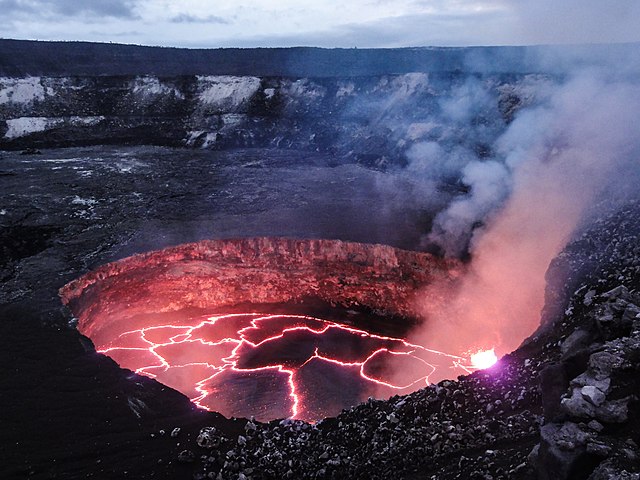
The action of the plate tectonics moving apart is creating plumes of molten lava to rise and form a large ocean of molten lava underneath Ethiopia. The main plume of volcanic lava is located beneath the Afar region of Ethiopia. It is also the location of three different tectonic plates, all at various ages and activity. Geologists have taken around 130 samples of volcanic rock in the region to try to understand exactly what is happening.
One of the most interesting aspects they have found is that there is one large plume beneath all three plates, and it has a pumping motion that has been described as resembling a heartbeat. At each of these rhythmic heartbeats, the plume rises and falls again.
Besides monitoring these movements in case of earthquake or volcanic activity at the surface, geologists are learning more about how to perhaps predict the eruption of a volcano in the future. These pulses act differently depending on the thickness of the mantle and crust above them. Research appears to show that volcanic activity may be focused at where the crust and mantle are thinnest. If this proves to be true, then perhaps we will be able to predict such activity earlier.

