To begin, humans do not figure in this as the animal world wins in all categories. I suppose many of us would, if asked this question, think of some of the birds of prey, such as hawks, eagles and kestrels, to name but a few. However, defining which creature has the best vision is not so easy to calculate, as we shall see.
A bird of prey can glide in the sky and see its prey from perhaps hundreds of feet up. This is impressive, but it is not the full story. There are trade-offs between having exceptional eyesight and the energy needed to attain it. This is because eyesight is a big component of the nervous system and requires a lot of energy to operate.
If we ask the question of which creature has the best vision, we have to split it up into three parts. These are who has the most detailed or resolution in eyesight? Then, which creature has the best colour vision? Finally, which animal has the fastest reaction to seeing things happen? No one creature wins all the categories, so we will have to consider each in turn.
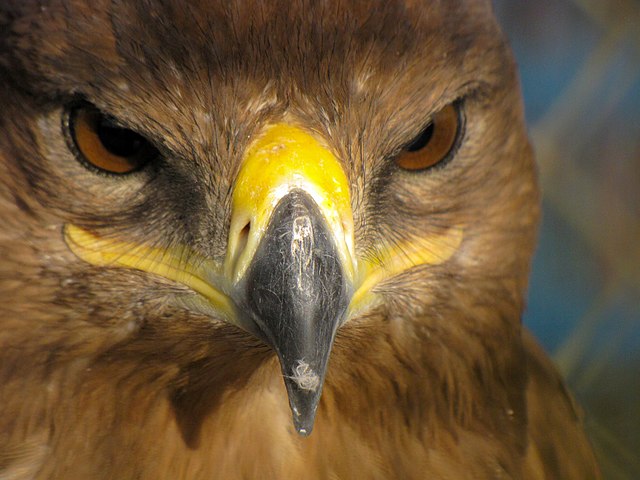
We spoke of birds of prey earlier and their ability to differentiate their targets from a great distance singles them out. They have five times the visual resolution of humans. They achieve this by having much larger eyes in comparison to the size of their head. They also have many more photoreceptors in the eye, which help them to see clearly.
The creature that has earned the title as best with colour vision beats all-comers and is the mantis shrimp. Colour photoreceptors for colour are located in the centre of the eyes and are called cones. Those on the outer part of the eye are termed rods, and they are used for night and low-level conditions. Our photoreceptors are grouped into three types, which react to red, green and blue light. Many creatures have at least four colour receptors. However, it is believed that the mantis shrimp has up to twelve photoreceptors. This allows it, we think, to see outside of the visual spectrum into the ultraviolet. However, some of its abilities may also be down to the way it processes its visual stimuli in the brain.
Finally, there is the speed of the visual signal reaching the brain and the time it takes to process that information. Once again, humans do not come out well. We can process visual information at a rate of up to 60 frames a second. TV pictures look like a continuous stream because they are broadcast at 25 frames per second. Films were traditionally shown at 24 frames per second. Many insects can process the same information at over 100 frames per second. This would mean that a fluorescent light which pulses would be seen as flashing on and off. A movie would appear as a fast-moving stream of still images.
Here is the answer to a question which many people might have asked themselves. Why is it so difficult to swat a fly? I am not advocating that you go around swatting flies! But if you had ever tried to do it, very often the fly would be out of the way before you were able to make contact with it. This is because a fly can process your movements faster than you can. In other words, it sees you coming and what you are doing and gets the hell out of there. The reason for this is quite simple. The distance between the eye and the brain of a fly is much shorter than in a human, and so it can react quickly.
However, there is always a trade-off. Resolution might suffer at the cost of seeing and reacting to movements quickly. Therefore, perhaps our average eyesight is not a bad compromise after all?

